

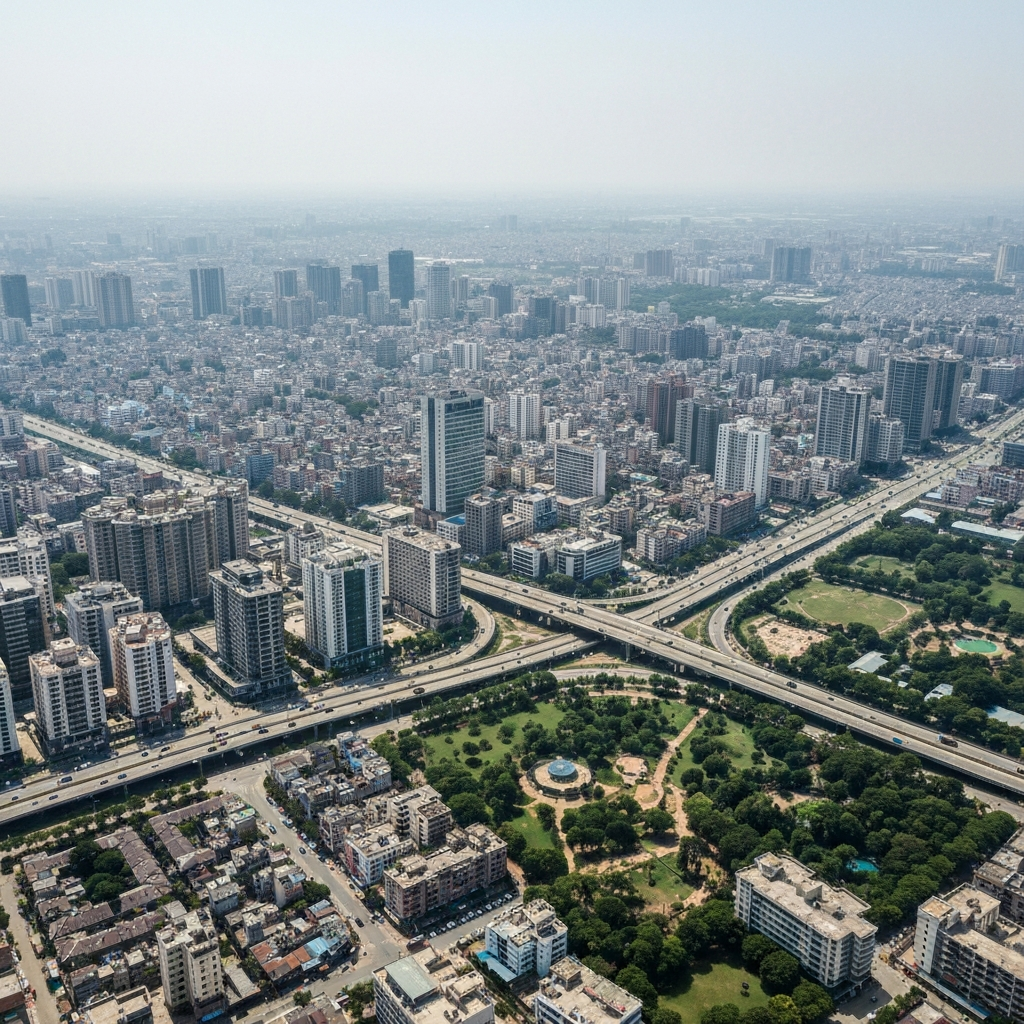
Dhaka, the capital of Bangladesh, is grappling with significant environmental challenges stemming from rapid urbanization and climate change. These issues are impacting the city’s livability and the health of its residents.
Rising Temperatures and Heat Stress
Over the past four decades, Dhaka has experienced a temperature increase of 1.4°C, surpassing the national average rise of 1.1°C. This warming trend is largely attributed to the loss of 47% of the city’s dense greenery between 1980 and 2023, replaced by heat-absorbing concrete structures. Consequently, residents have faced a 7.7% increase in heat stress since 1980. Source
Air Pollution Concerns
Dhaka’s air quality is deteriorating due to emissions from vehicles, industrial activities, and construction dust. The city frequently records high levels of particulate matter (PM2.5 and PM10), posing serious health risks. Studies indicate that Dhaka’s air pollution levels often exceed safe limits, leading to respiratory and cardiovascular diseases among residents. Source
Water Pollution and Waterlogging
The city’s rivers, including the Buriganga, Turag, Shitalakkhya, and Balu, suffer from severe pollution due to untreated industrial effluents and sewage discharge. Additionally, rapid urbanization has led to the encroachment of natural wetlands, resulting in frequent waterlogging during the monsoon season. This not only disrupts daily life but also contributes to the spread of waterborne diseases. Source
Loss of Green Spaces
Dhaka’s green spaces are dwindling, with formally designated parks and gardens accounting for only 7% of the city’s land. The existing parks, such as Ramna Park and Suhrawardy Udyan, are overcrowded and suffer from pollution, limiting their effectiveness in providing respite from the urban environment. Source
Path Forward
Addressing these environmental challenges requires a multifaceted approach. Enhancing urban planning to incorporate more green spaces, enforcing environmental regulations to control pollution, and investing in sustainable infrastructure are crucial steps. Public awareness and community involvement are also essential in fostering a culture of environmental responsibility.
By implementing sustainable solutions, Dhaka can mitigate the adverse effects of urbanization and climate change, ensuring a healthier and more livable environment for its residents.