

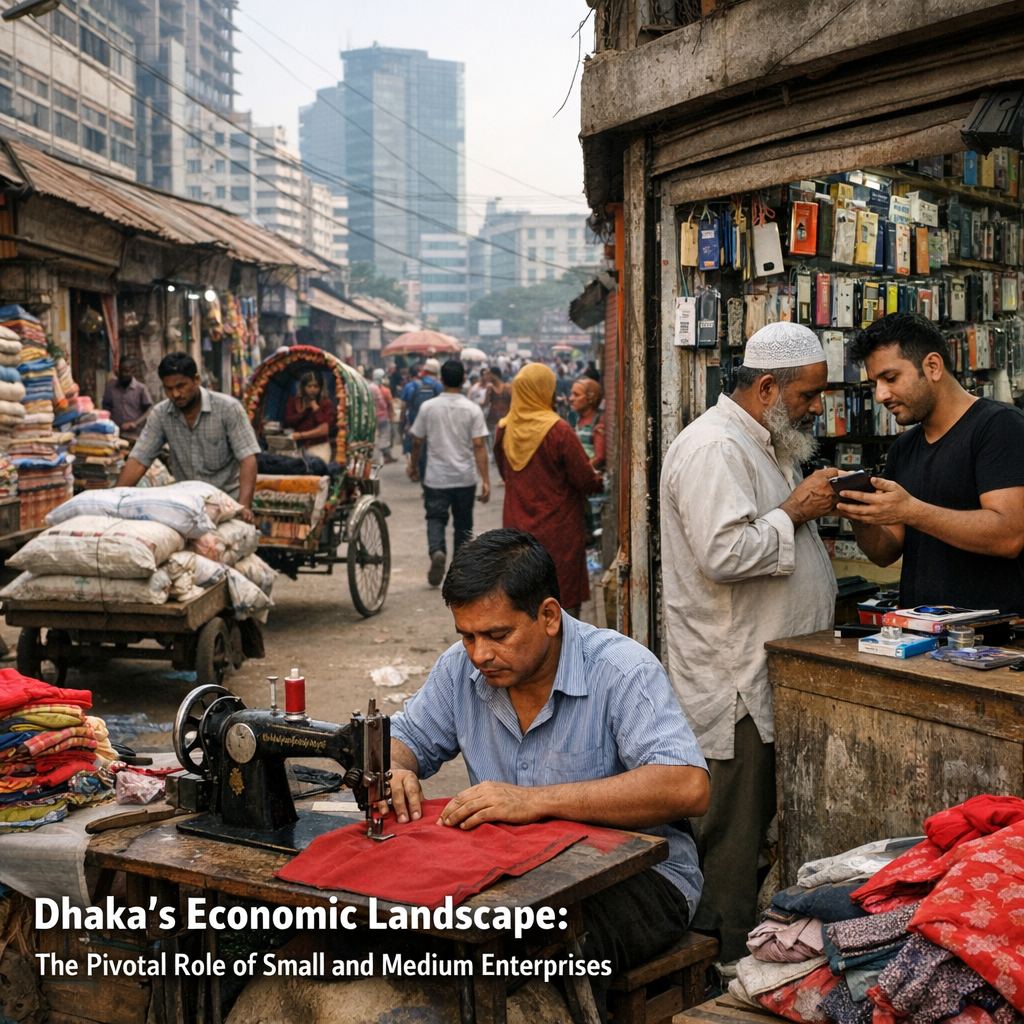
Dhaka, the vibrant capital of Bangladesh, stands as a testament to rapid urbanization and economic dynamism. At the heart of this growth are Small and Medium Enterprises (SMEs), which have become the backbone of the city’s economy.
The Rise of SMEs in Dhaka
Over the past decade, the number of economic units in Bangladesh has surged by nearly 50%, with micro and cottage industries leading this expansion. According to the Economic Census 2024 by the Bangladesh Bureau of Statistics (BBS), economic units increased from 7.8 million in 2013 to 11.7 million in 2024. This growth reflects a broad-based diversification of economic activities across the nation, with Dhaka playing a central role.
Challenges Facing SMEs
Despite their significant contributions, SMEs in Dhaka face numerous challenges. Entrepreneurs report a substantial drop in sales due to economic pressures, market instability, and financing hurdles. Rising costs, particularly in rent and raw materials, have forced many to downsize or cease operations.
Access to finance remains a critical issue. While the process of obtaining bank loans has become somewhat easier, many entrepreneurs still encounter bureaucratic obstacles and stringent documentation requirements. This has led to a financing crunch, particularly for grassroots entrepreneurs and women-led businesses.
Infrastructure and Policy Support
Infrastructure deficiencies, such as traffic congestion and waterlogging, further impede business operations in Dhaka. The Dhaka Chamber of Commerce and Industry (DCCI) has identified these issues as major concerns for businesses, especially in Old Dhaka, and has called for prompt solutions.
To support SMEs, initiatives like the proposed ‘Dhaka Haat’ have been recommended. Modeled after Delhi’s successful handicraft market, this year-round marketplace would provide a dedicated space for local artisans and small businesses to showcase and sell their products, fostering economic growth and encouraging entrepreneurship.
The Path Forward
For Dhaka’s SMEs to thrive, a multifaceted approach is necessary. Simplifying loan procedures, improving infrastructure, and providing targeted support for women entrepreneurs are crucial steps. Additionally, fostering a culture of local investment can provide the necessary capital and mentorship for SMEs to scale and innovate.
As Dhaka continues to evolve, empowering its SMEs will be key to ensuring sustainable economic growth and resilience in the face of global challenges.