

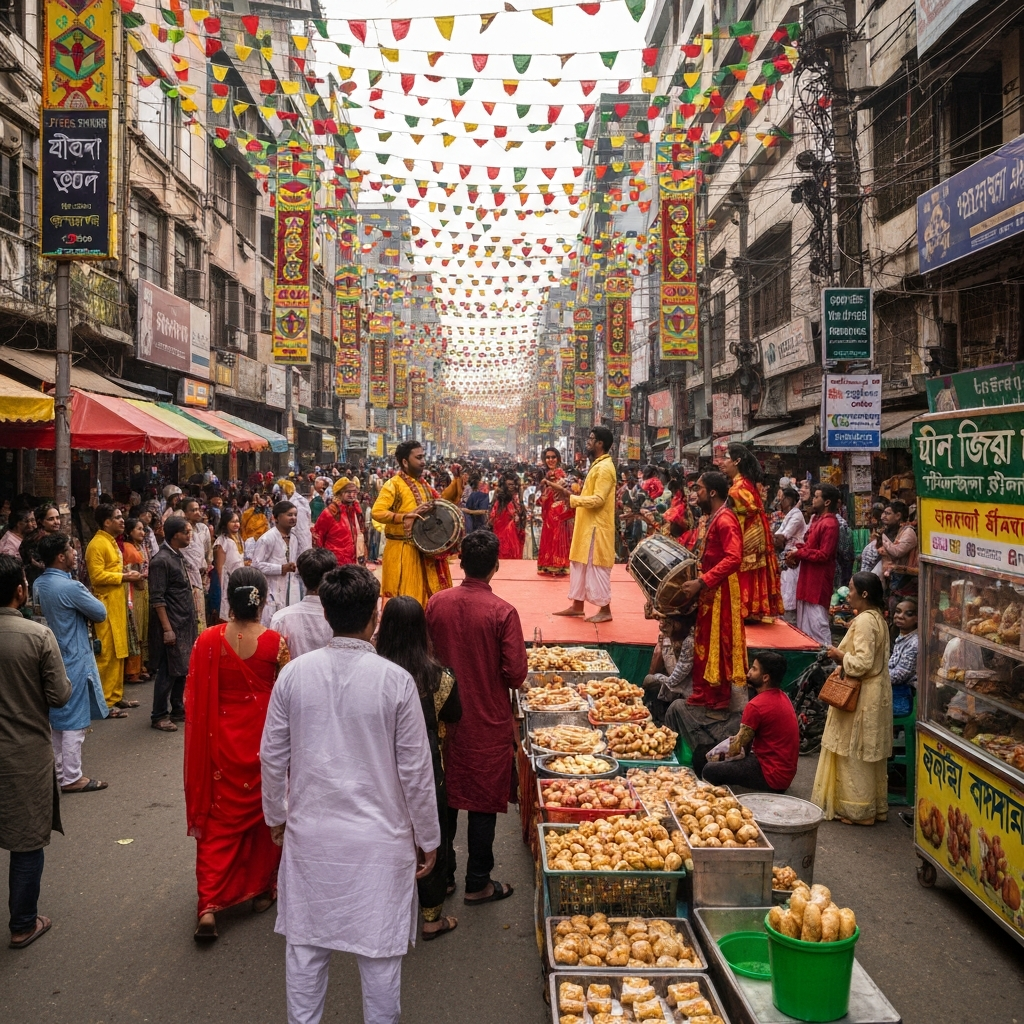
Dhaka, the heart of Bangladesh, is a city pulsating with artistic energy and cultural vibrancy. Its rich heritage and contemporary dynamism offer residents and visitors a plethora of experiences that celebrate both tradition and modernity.
Annual Cultural Festivals
The city comes alive with numerous festivals throughout the year. Pohela Boishakh, the Bengali New Year, is celebrated with colorful processions, traditional music, and dance, marking a fresh start with cultural fervor. Victory Day on December 16th commemorates Bangladesh’s liberation with patriotic songs, performances, and exhibitions that honor the nation’s history. Additionally, the International Mother Language Day on February 21st pays tribute to the language martyrs, emphasizing the importance of linguistic and cultural identity.
Art Exhibitions and Galleries
Dhaka’s art scene is thriving, with numerous galleries and exhibitions showcasing both emerging and established artists. The Dhaka Art Summit, organized biennially by the Samdani Art Foundation, is a significant event that brings together artists, curators, and art enthusiasts from around the world to celebrate South Asian art and architecture. This non-commercial platform focuses on research and exhibition, fostering a rich context for artistic production and dialogue.
Another notable venue is Studio 6/6, an independent art space in Mohammadpur. Since its inception in 2015, it has hosted numerous exhibitions, workshops, and events, providing a platform for artists to experiment and engage with the community.
Music and Performing Arts
Music is an integral part of Dhaka’s cultural fabric. The city hosts various musical events ranging from classical performances to contemporary concerts. Venues like the Bangladesh Shilpakala Academy regularly organize musical evenings, featuring genres such as Nazrul Sangeet, Rabindra Sangeet, and folk music. These events not only entertain but also preserve and promote Bangladesh’s rich musical heritage.
Engaging with Dhaka’s Cultural Landscape
For those looking to immerse themselves in Dhaka’s arts and culture, staying updated with local event calendars and visiting cultural centers like the Alliance Française de Dhaka can be enriching. These institutions often host exhibitions, workshops, and performances that reflect the city’s dynamic cultural scene.
In conclusion, Dhaka’s arts and culture scene is a testament to its rich history and evolving contemporary identity. Engaging with the city’s festivals, exhibitions, and performances offers a deeper understanding and appreciation of its unique cultural tapestry.