

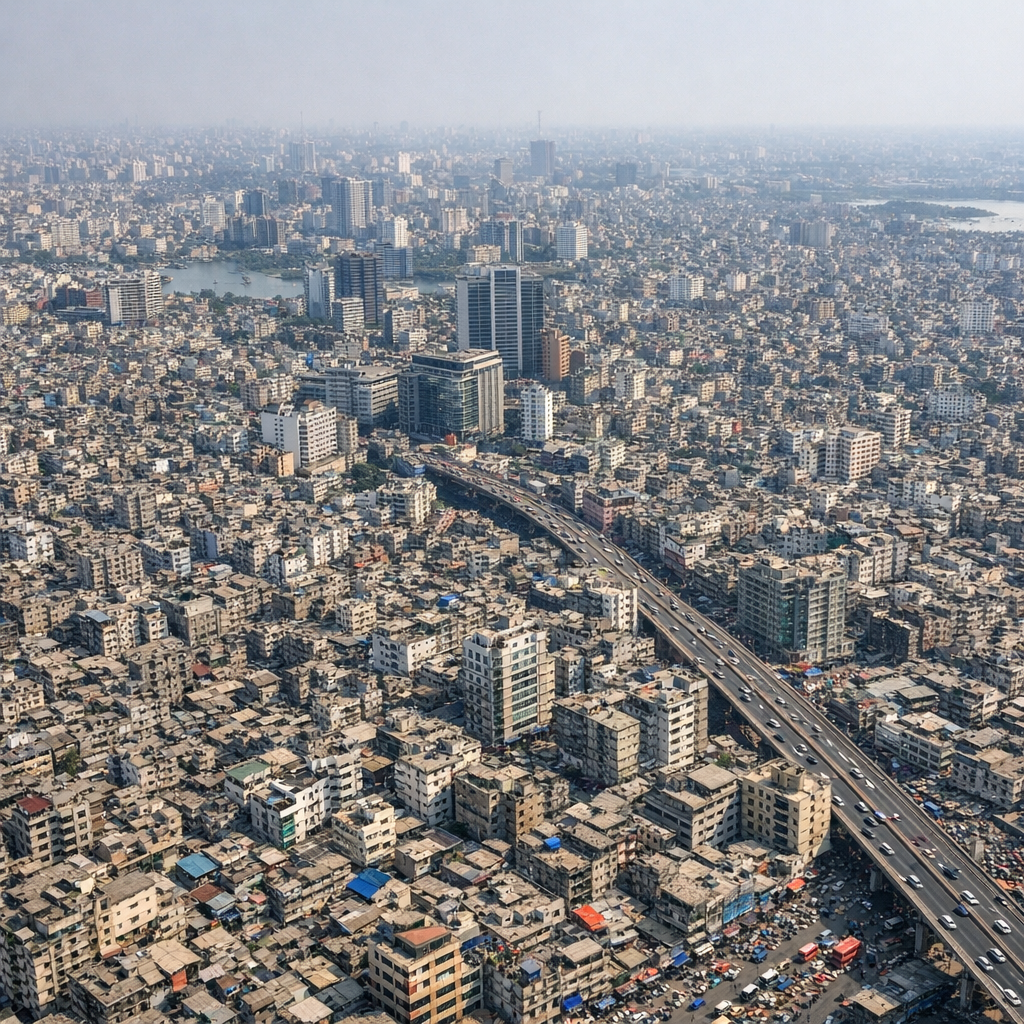
Dhaka, the capital of Bangladesh, has experienced rapid urbanization over the past few decades. This growth has led to significant environmental challenges, notably the Urban Heat Island (UHI) effect, where urban areas become significantly warmer than their rural surroundings.
Causes of the Urban Heat Island Effect
The primary contributors to the UHI effect in Dhaka include:
- Land Use Changes: The transformation of natural landscapes into urban areas with concrete and asphalt surfaces increases heat absorption and reduces natural cooling.
- Reduced Vegetation: The decrease in green spaces limits the cooling effects of evapotranspiration, leading to higher temperatures.
- Anthropogenic Heat: Activities such as transportation, industrial processes, and air conditioning release additional heat into the environment.
Impacts on Dhaka
The UHI effect in Dhaka has several significant consequences:
- Health Risks: Elevated temperatures can lead to heat-related illnesses, particularly among vulnerable populations.
- Energy Consumption: Increased demand for cooling leads to higher energy consumption and associated costs.
- Environmental Degradation: Higher temperatures can exacerbate air pollution and negatively affect local ecosystems.
Mitigation Strategies
Addressing the UHI effect requires a multifaceted approach:
- Enhancing Green Spaces: Developing parks, green roofs, and urban forests can help cool the city through shade and evapotranspiration.
- Sustainable Urban Planning: Implementing designs that promote natural ventilation and reduce heat absorption can mitigate temperature increases.
- Reflective Materials: Using materials with high albedo for buildings and pavements can reflect more sunlight and absorb less heat.
By understanding and addressing the factors contributing to the UHI effect, Dhaka can work towards creating a more sustainable and livable urban environment.