

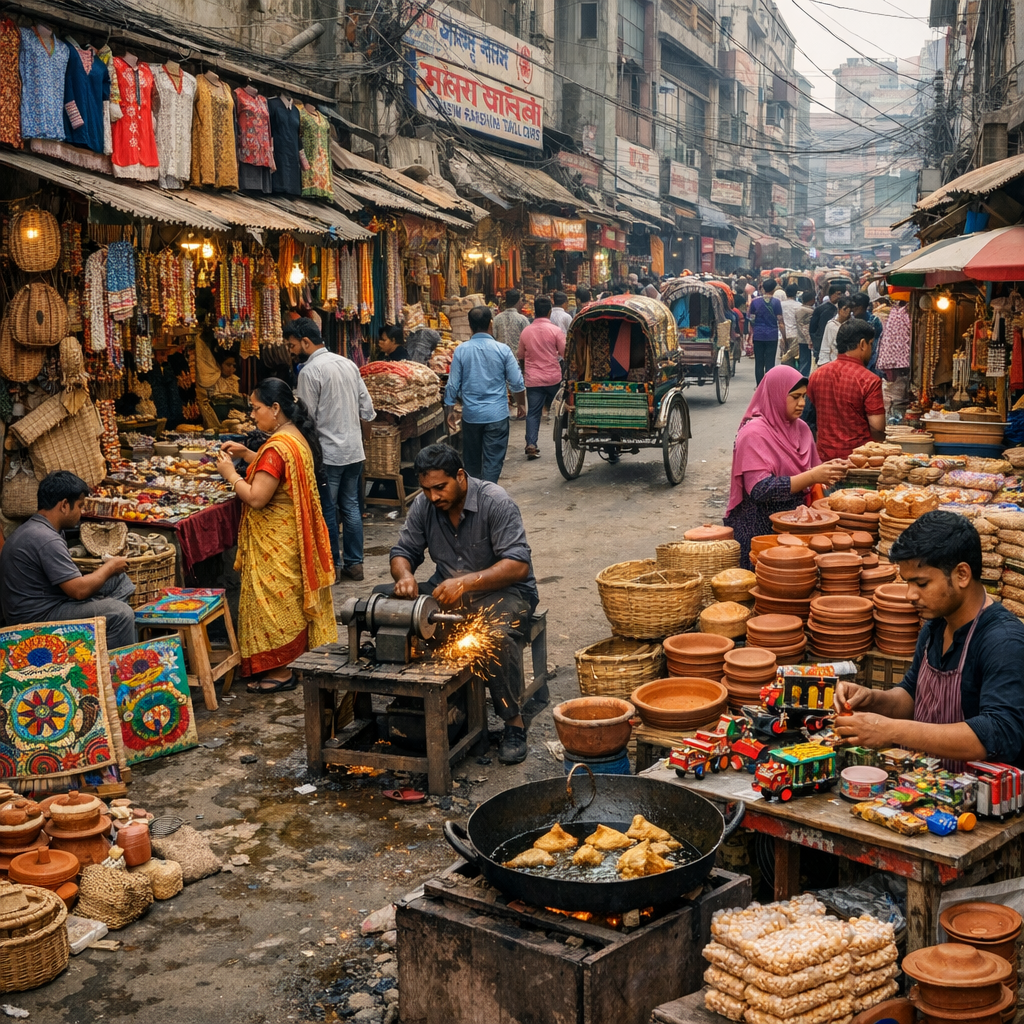
Dhaka, the bustling capital of Bangladesh, has witnessed a remarkable transformation in its economic landscape over the past decade. Central to this evolution is the significant rise of micro and cottage industries, which have become pivotal in driving the city’s economic growth and diversification.
Surge in Economic Units
According to the Economic Census 2024 released by the Bangladesh Bureau of Statistics (BBS), the total number of economic units in the country increased from 7.8 million in 2013 to 11.7 million in 2024, marking a growth of 49.68%. This substantial rise is largely attributed to the proliferation of micro and cottage industries, reflecting a broad-based expansion of economic activities across both rural and urban areas.
Manufacturing Sector’s Dominance
The manufacturing sector has emerged as a dominant force in Dhaka’s economy. A study by the Dhaka Chamber of Commerce and Industry (DCCI) reveals that manufacturing contributes 56% to the district’s economy, surpassing the service sector’s 44%. Within manufacturing, the ready-made garment (RMG) industry leads with a 58.6% share, followed by food products at 13.4% and textiles at 9.3%. This dominance underscores the sector’s critical role in the city’s economic framework.
Challenges Facing Small Businesses
Despite the positive growth trajectory, small and medium-sized enterprises (SMEs) in Dhaka face several challenges. Business representatives have highlighted issues such as regulatory complexities, ambiguity in tax and value-added tax (VAT) rules, deteriorating law and order, and persistent gas and electricity shortages. These factors have increased operational costs and hindered business growth, emphasizing the need for policy interventions to create a more conducive environment for SMEs.
Initiatives to Support SMEs
Recognizing the importance of SMEs, initiatives like the proposed ‘Dhaka Haat’ have been recommended. Modeled after Delhi’s successful handicraft market, this year-round marketplace aims to provide a dedicated space for local artisans and small businesses to showcase and sell their products. Managed under the SME Foundation, such initiatives are expected to enhance visibility for local products and support capacity building within the SME sector.
Conclusion
The rise of micro and cottage industries has significantly contributed to Dhaka’s economic growth, reflecting the resilience and entrepreneurial spirit of its people. However, addressing the challenges faced by SMEs through supportive policies and infrastructure development is crucial to sustain this momentum and ensure inclusive economic progress.