

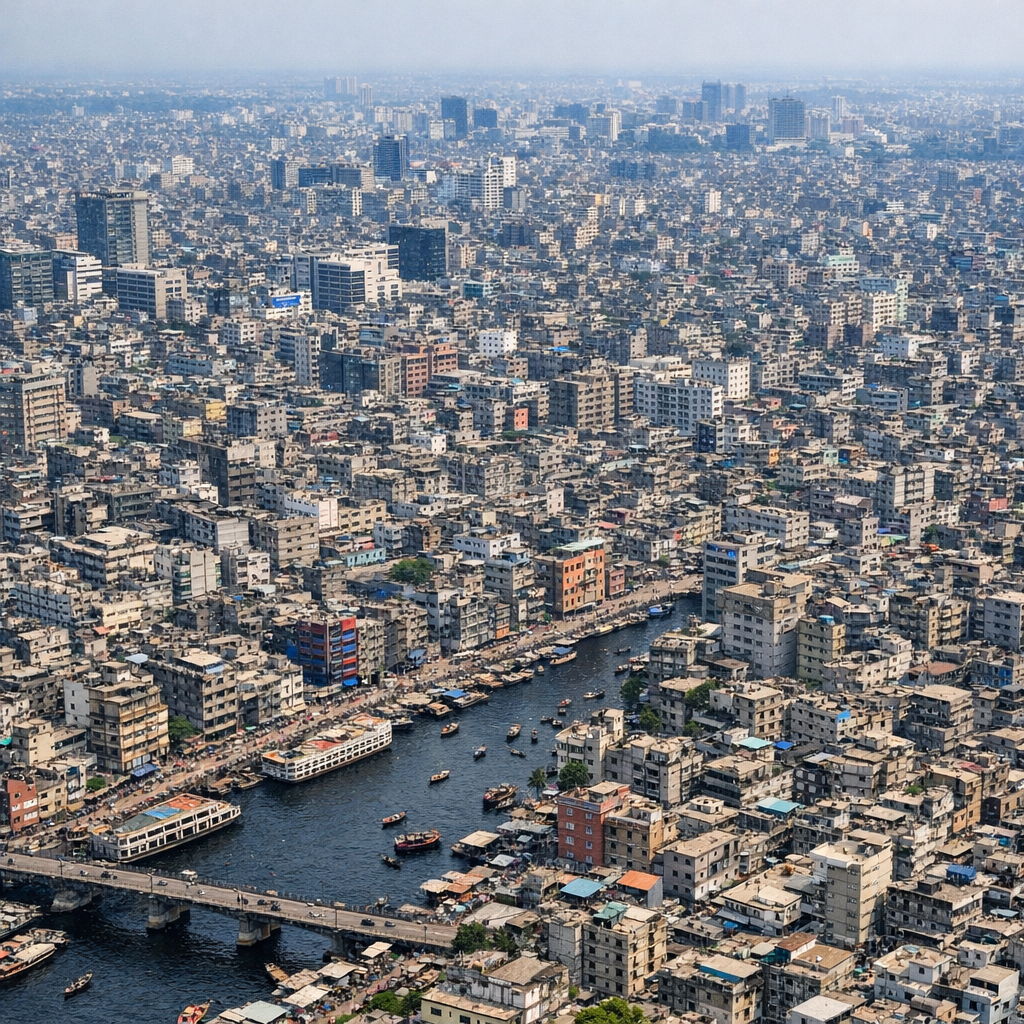
Dhaka, the capital of Bangladesh, has experienced rapid urbanization over the past few decades. This swift development has led to significant changes in land use and has intensified the Urban Heat Island (UHI) effect, where urban areas become significantly warmer than their rural surroundings.
What is the Urban Heat Island Effect?
The UHI effect occurs when natural land cover is replaced with dense concentrations of pavement, buildings, and other surfaces that absorb and retain heat. This leads to higher temperatures in urban areas compared to adjacent rural regions. Factors contributing to the UHI effect include reduced vegetation, increased energy consumption, and the thermal properties of urban materials.
Dhaka’s Rising Temperatures
Studies have shown that Dhaka’s UHI intensity has been increasing over the past 25 years, with an average rise of 0.21°C per decade. The UHI effect is most pronounced during the winter season, with an average intensity of 0.95°C, and is weakest during the monsoon season at 0.23°C. Notably, the UHI effect is strongest at 9:00 PM local time across all seasons.
Impact on Residents
The intensified UHI effect in Dhaka has several implications for its residents:
- Health Risks: Elevated temperatures can lead to heat-related illnesses, especially among vulnerable populations such as the elderly and children.
- Energy Consumption: Higher temperatures increase the demand for air conditioning, leading to higher energy consumption and costs.
- Environmental Degradation: Increased temperatures can exacerbate air pollution levels and strain water resources.
Mitigation Strategies
Addressing the UHI effect requires a multifaceted approach:
- Enhancing Green Spaces: Increasing urban vegetation through parks, green roofs, and tree-lined streets can help cool the environment.
- Reflective Building Materials: Using materials that reflect rather than absorb heat can reduce building temperatures.
- Urban Planning: Implementing sustainable urban planning practices that prioritize natural landscapes and reduce heat-absorbing surfaces.
By understanding and addressing the factors contributing to the UHI effect, Dhaka can work towards creating a more sustainable and comfortable environment for its residents.