

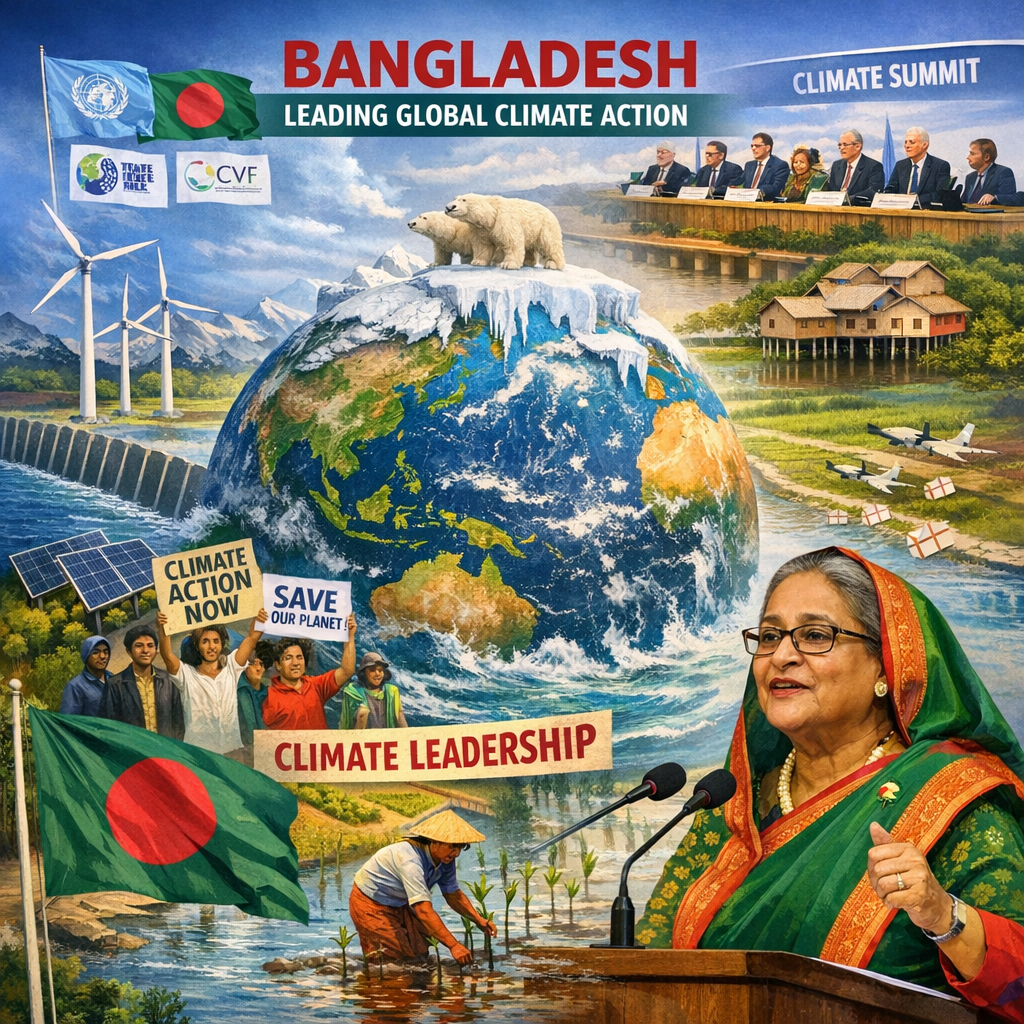
Bangladesh, despite contributing less than 0.5% to global greenhouse gas emissions, has emerged as a proactive leader in global climate action. Recognizing its vulnerability to climate change, the nation has implemented comprehensive strategies to mitigate and adapt to environmental challenges.
National Strategies and Commitments
In 2009, Bangladesh introduced the Bangladesh Climate Change Strategy and Action Plan (BCCSAP), outlining 44 programs across six strategic areas, including food security, disaster management, and low-carbon development. This plan serves as a foundational framework for the country’s climate initiatives.
Furthering its commitment, Bangladesh submitted its Third Nationally Determined Contribution (NDC 3.0) in September 2025, aiming to reduce greenhouse gas emissions by 20.31% from business-as-usual levels by 2035. This includes an unconditional target of 6.39% and a conditional target of 13.92% with international support.
International Advocacy and Leadership
Bangladesh has been instrumental in global climate diplomacy. As a former chair of the Climate Vulnerable Forum (CVF), the country has consistently advocated for developed nations to provide affordable clean technologies to vulnerable countries. Additionally, Bangladesh emphasizes the importance of shared responsibilities for migrants displaced by climate-induced events.
Financial Mechanisms and Investments
To support its climate initiatives, Bangladesh established the Bangladesh Climate Change Trust Fund (BCCTF) in 2010, allocating approximately $300 million from domestic resources between 2009 and 2012. This fund has financed over 800 projects focused on climate adaptation and mitigation.
Moreover, the country allocates about $3 billion annually for adaptation and disaster management, with 75% of this funding sourced domestically.
Renewable Energy and Sustainable Development
Bangladesh is actively transitioning towards renewable energy. As of 2024, renewable sources constitute 2.93% of the country’s energy mix, amounting to 650.14 MW. The nation has set ambitious goals to reduce carbon emissions by 21.8% by 2030, focusing on increased use of renewable energy and energy efficiency.
Through these concerted efforts, Bangladesh not only addresses its own climate challenges but also sets a precedent for other nations, especially those in the Global South, to pursue sustainable development and climate resilience.