

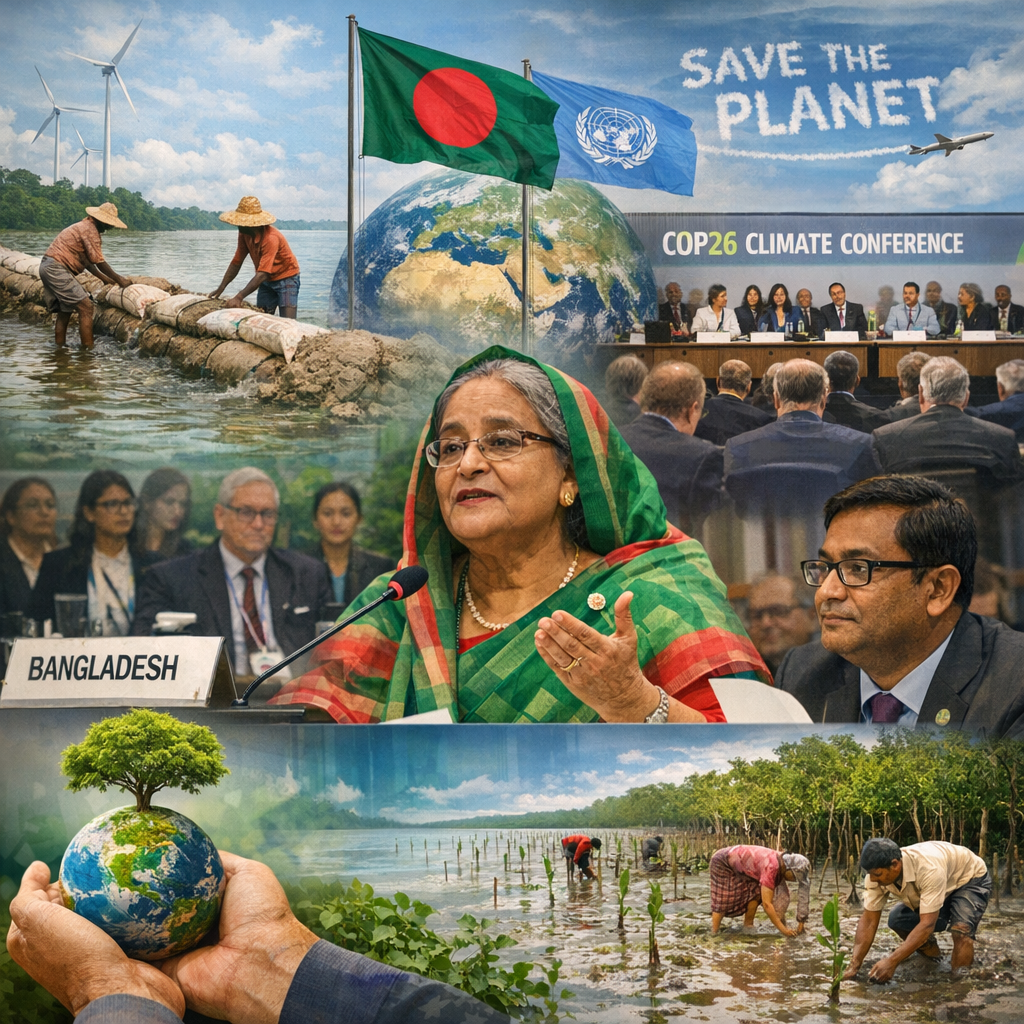
Bangladesh, despite contributing less than 0.5% to global greenhouse gas emissions, stands as one of the most vulnerable countries to climate change impacts. This paradox has propelled the nation to the forefront of global climate advocacy, championing the cause of vulnerable nations and implementing proactive strategies to combat climate change.
Active Participation in International Forums
Bangladesh has been instrumental in international climate diplomacy. As a former chair of the Climate Vulnerable Forum (CVF), the country has consistently urged developed nations to provide affordable clean and green technologies to the most vulnerable countries. Additionally, Bangladesh has been a vocal advocate for addressing the challenges faced by migrants displaced due to rising sea levels, increasing salinity, river erosion, floods, and droughts.
National Strategies and Action Plans
Recognizing the urgency of climate action, Bangladesh developed the Bangladesh Climate Change Strategy and Action Plan (BCCSAP) in 2009. This comprehensive plan outlines 44 programs across six strategic areas: food security, social protection and health; comprehensive disaster management; infrastructure; research and knowledge management; mitigation and low carbon development; and capacity building and institutional strengthening. The BCCSAP serves as a roadmap for the country’s climate resilience and adaptation efforts.
Financial Commitments and Initiatives
Bangladesh has demonstrated its commitment to climate action through substantial financial investments. The Bangladesh Climate Change Trust Fund (BCCTF) was established with a capital of USD 100 million, financing over eight hundred projects dedicated to effective climate adaptation and mitigation. Notably, the country allocates about $3 billion annually for adaptation and disaster management, with 75% of this funding sourced domestically.
Energy Transition and Renewable Energy Goals
In its pursuit of a sustainable future, Bangladesh has set ambitious goals to reduce carbon emissions by 21.8% by 2030, focusing on increased use of renewable energy and energy efficiency. The country has developed mid- and long-term climate-related initiatives and plans, such as the National Solar Energy Roadmap 2021-41 and the Bangladesh Delta Plan 2100. These initiatives aim to enhance climate resilience through adaptation measures and promote sustainable development.
Advocacy for Climate Justice
Bangladesh has emerged as a leading voice for climate justice, particularly for nations in the Global South. The country has shown resilience and determination in holding developed nations accountable for their role in accelerating climate change. By advocating for greater ambition from major emitting countries and emphasizing the need for international support for adaptation and loss and damage, Bangladesh underscores the pressing need for global solidarity in addressing climate change.
Through these multifaceted efforts, Bangladesh exemplifies proactive leadership in global climate change initiatives, striving to build a resilient and sustainable future for its citizens and serving as a model for other vulnerable nations.