

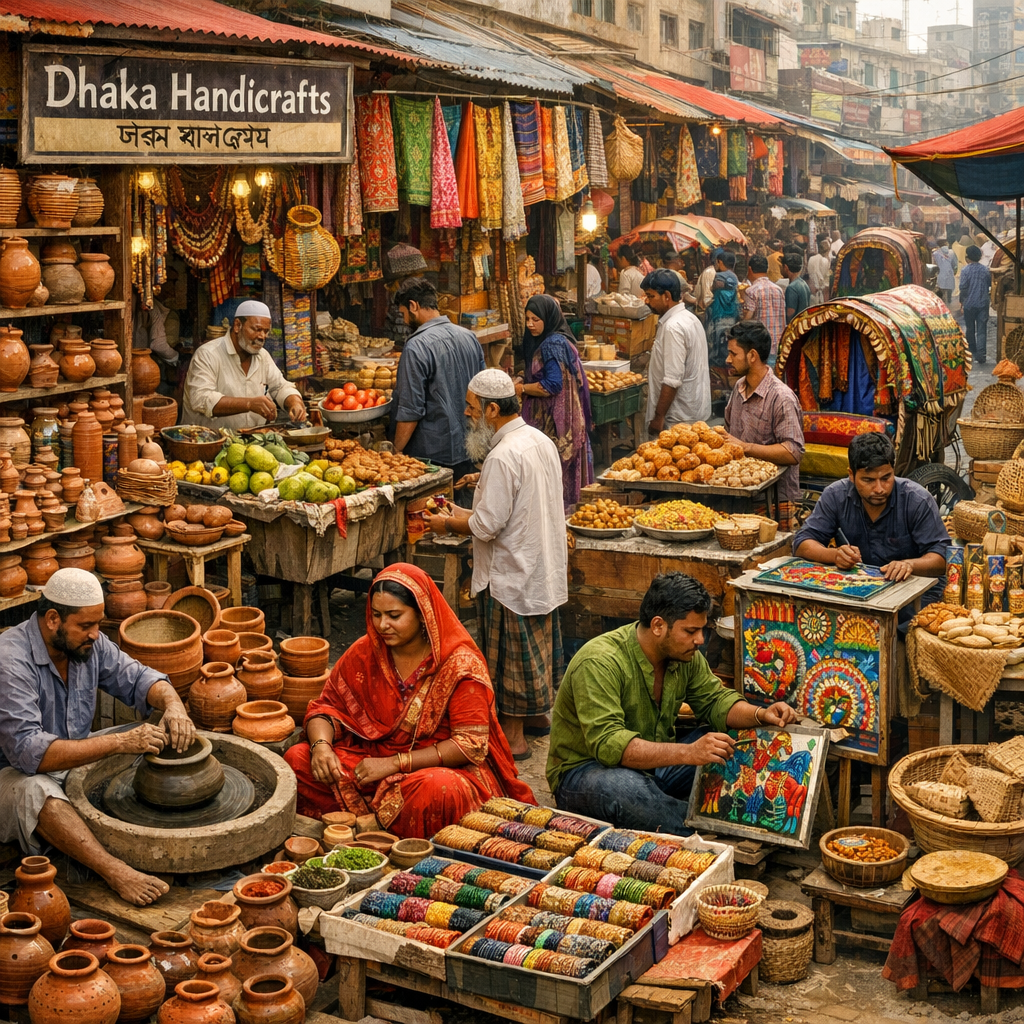
Dhaka, the bustling capital of Bangladesh, stands as a testament to rapid economic growth and diversification. Central to this development are the micro and cottage industries, which have become the backbone of the city’s economy.
Significant Growth in Economic Units
According to the Economic Census 2024 by the Bangladesh Bureau of Statistics (BBS), the number of economic units in the country surged from 7.8 million in 2013 to 11.7 million in 2024, marking a 49.68% increase. This remarkable growth is largely attributed to the expansion of micro and cottage industries, reflecting a broad-based diversification of economic activities across both rural and urban areas.
Manufacturing Sector’s Dominance
The manufacturing sector plays a pivotal role in Dhaka’s economy, accounting for 56% of the city’s economic activities. Within this sector, the ready-made garment (RMG) industry leads with a 58.6% share, followed by food products at 13.4% and textiles at 9.3%. This dominance underscores the city’s position as a manufacturing hub, with micro and cottage industries contributing significantly to this landscape.
Challenges Faced by SMEs
Despite their substantial contributions, small and medium enterprises (SMEs) in Dhaka face several challenges. Entrepreneurs report a significant drop in sales due to economic pressures, market instability, and financing hurdles. Rising costs and reduced consumer purchasing power have led many businesses to scale down operations or, in some cases, cease them altogether. Access to finance remains a major hurdle, particularly for grassroots entrepreneurs, who often encounter difficulties due to documentation issues and the reluctance of financial institutions to provide support.
Initiatives to Support SMEs
Recognizing the importance of SMEs, initiatives like the proposed ‘Dhaka Haat’ aim to provide dedicated spaces for local artisans and small businesses to showcase and sell their products. Modeled after successful markets in other countries, this initiative seeks to foster economic growth and encourage entrepreneurship by offering a platform for SMEs to thrive.
Conclusion
Micro and cottage industries are integral to Dhaka’s economic fabric, driving growth and providing employment opportunities. While challenges persist, targeted initiatives and supportive policies can bolster these industries, ensuring their continued contribution to the city’s economic vitality.