

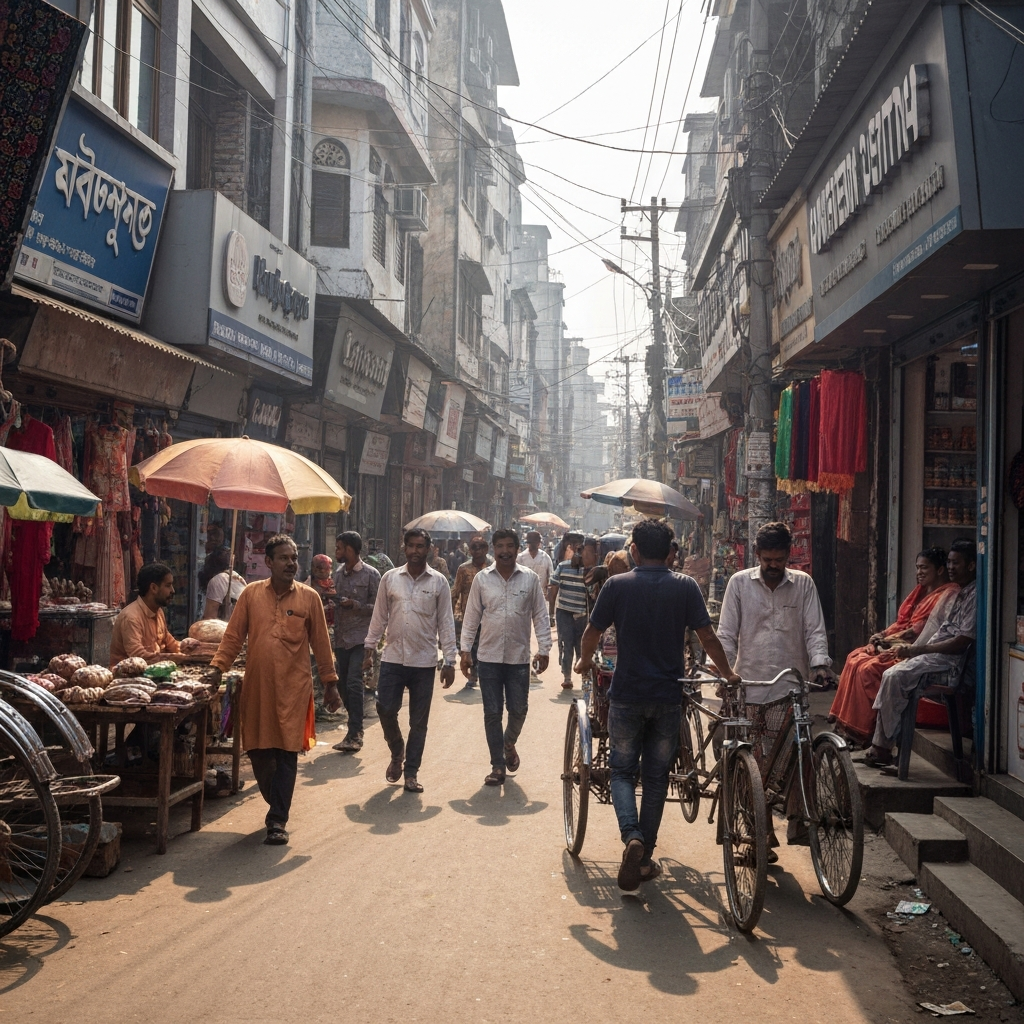
Dhaka, the vibrant capital of Bangladesh, stands as a testament to rapid urbanization and economic dynamism. At the heart of this growth are Small and Medium Enterprises (SMEs), which have become the backbone of the city’s economy.
SMEs: The Driving Force
Recent data underscores the significance of SMEs in Dhaka’s economic framework. The Economic Census 2024 by the Bangladesh Bureau of Statistics (BBS) reveals a substantial increase in economic units, rising from 7.8 million in 2013 to 11.7 million in 2024—a growth of nearly 50%. This surge is predominantly attributed to the expansion of micro and cottage industries, highlighting the entrepreneurial spirit permeating both urban and rural areas.
In Dhaka, the manufacturing sector plays a pivotal role, accounting for 56% of the city’s economic activities. Within this sector, the ready-made garment (RMG) industry leads with a 58.6% share, followed by food products at 13.4% and textiles at 9.3%. The service sector complements this growth, with wholesale and retail trade dominating at 60.2%, real estate at 20.8%, and transport at 19%.
Challenges Facing SMEs
Despite their critical role, SMEs in Dhaka encounter several challenges. Entrepreneurs report significant drops in sales due to economic pressures, market instability, and financing hurdles. Rising operational costs, particularly in rent and raw materials, have led some businesses to downsize or cease operations.
Access to finance remains a formidable barrier. Many SME owners face difficulties in securing bank loans due to stringent documentation requirements and perceived risks associated with small-scale ventures. This financial constraint hampers their ability to expand, innovate, and compete effectively.
Infrastructure and Policy Support
Infrastructure issues, such as traffic congestion and waterlogging, further impede business operations, especially in areas like Old Dhaka. These challenges disrupt supply chains, increase operational costs, and deter customer engagement.
Recognizing these hurdles, initiatives like the proposed ‘Dhaka Haat’ aim to provide dedicated spaces for SMEs to showcase and sell their products, fostering economic growth and encouraging entrepreneurship.
The Path Forward
To sustain and enhance the contributions of SMEs to Dhaka’s economy, a multifaceted approach is essential. Simplifying loan procedures, offering targeted financial support, and providing training programs can empower entrepreneurs. Additionally, improving infrastructure and creating supportive policies will enable SMEs to thrive, ensuring that Dhaka’s economic landscape remains robust and inclusive.