

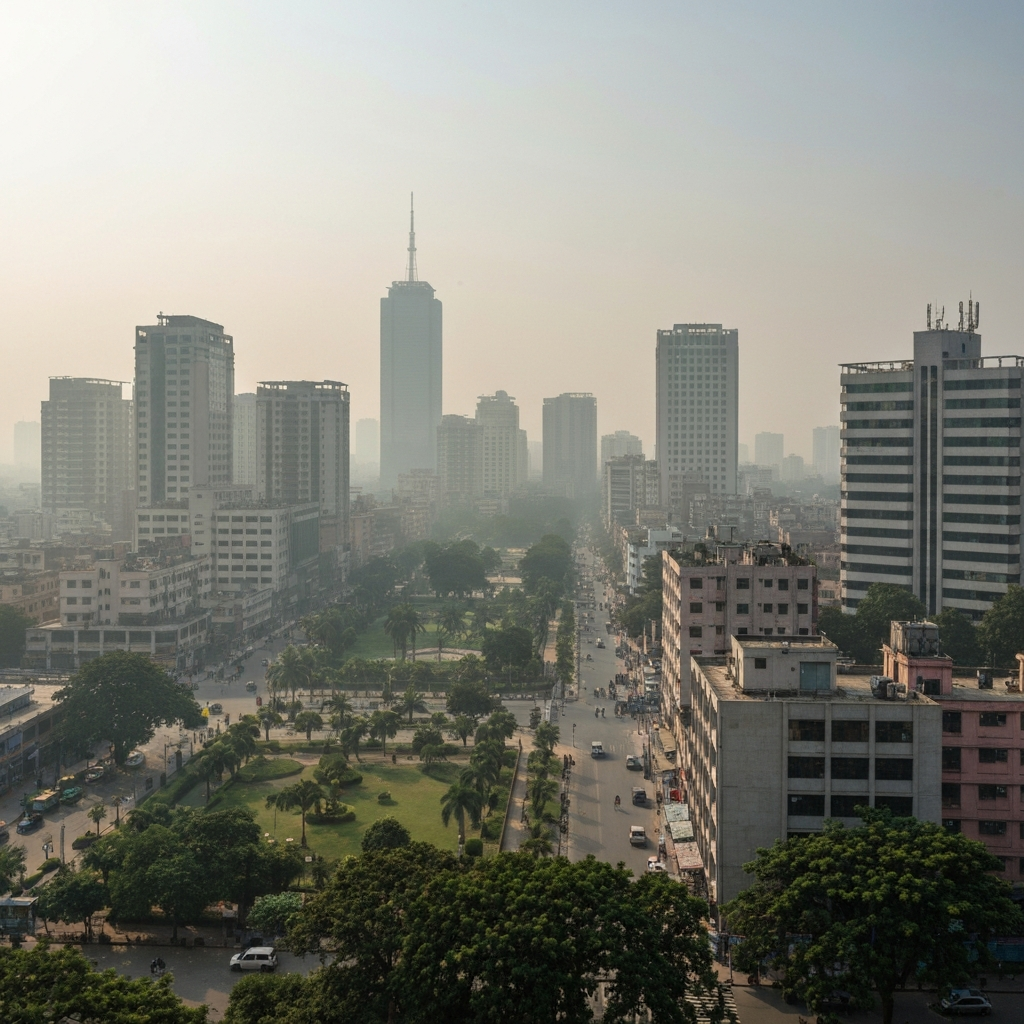
Dhaka, the capital of Bangladesh, is experiencing significant environmental challenges as a result of rapid urbanization and population growth. These issues include deteriorating air quality, rising temperatures, and water pollution, all of which have profound implications for public health and the city’s livability.
Declining Air Quality
Dhaka’s air quality has been consistently ranked among the worst globally. A major contributor to this pollution is the abundance of dust and black smoke, heavily affecting areas like Paltan, Kakrail, Mohammadpur, Lalmatia, Dhanmondi, Farmgate, Gulshan, and Mirpur.
Rising Urban Temperatures
Between 1980 and 2023, Dhaka’s maximum temperature increased by 1.4°C, outpacing the national average rise of 1.1°C. This warming trend is linked to the loss of 47% of the city’s dense greenery due to urban expansion, leading to increased heat stress for residents.
Water Pollution and Ecosystem Degradation
Over 10,000 industries around Dhaka discharge untreated effluents into surface water, severely impacting river ecosystems. The absence of proper enforcement of environmental regulations exacerbates the situation, leading to the degradation of aquatic habitats and posing risks to public health.
Path Forward
Addressing these environmental challenges requires a multifaceted approach. Implementing and enforcing stricter environmental regulations, promoting green urban planning, and investing in sustainable infrastructure are essential steps. Public awareness and community engagement are also crucial in fostering a culture of environmental responsibility.
By adopting sustainable practices and policies, Dhaka can mitigate the adverse effects of rapid urbanization and ensure a healthier, more livable environment for its residents.