

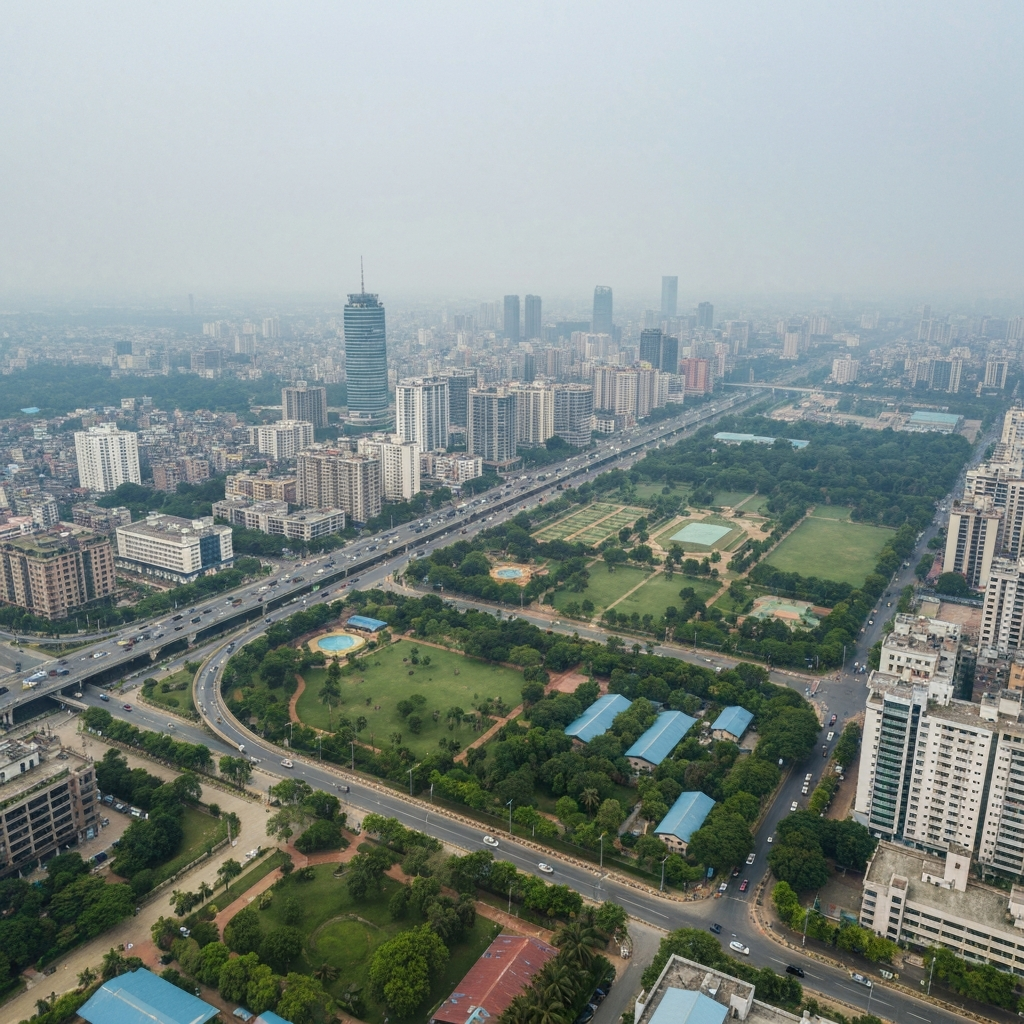
Dhaka, the capital of Bangladesh, is grappling with a series of environmental challenges that threaten the health and well-being of its residents. Rapid urbanization, industrialization, and population growth have intensified issues such as air pollution, rising temperatures, and waterlogging.
Escalating Air Pollution
The city’s air quality has deteriorated significantly, often ranking among the worst globally. Major contributors include emissions from vehicles, industrial activities, and construction dust. Studies have shown that Dhaka’s air pollution levels frequently exceed safe limits, posing serious health risks to the population.
Rising Urban Heat
Over the past four decades, Dhaka has experienced a temperature increase of 1.4°C, surpassing the national average. This rise is attributed to the loss of nearly half of the city’s dense greenery due to urban expansion, leading to increased heat stress among residents.
Persistent Waterlogging
Unplanned urbanization and inadequate drainage systems have made Dhaka susceptible to waterlogging during the monsoon season. Heavy rainfall often overwhelms the city’s drainage capacity, causing prolonged flooding that disrupts daily life and poses health hazards.
Path Towards Sustainability
Addressing these environmental challenges requires a multifaceted approach. Enhancing green spaces, enforcing environmental regulations, and investing in sustainable urban planning are crucial steps. Community engagement and awareness are also vital in fostering a collective effort towards a healthier and more resilient Dhaka.
By implementing sustainable solutions, Dhaka can mitigate environmental risks and improve the quality of life for its residents.