

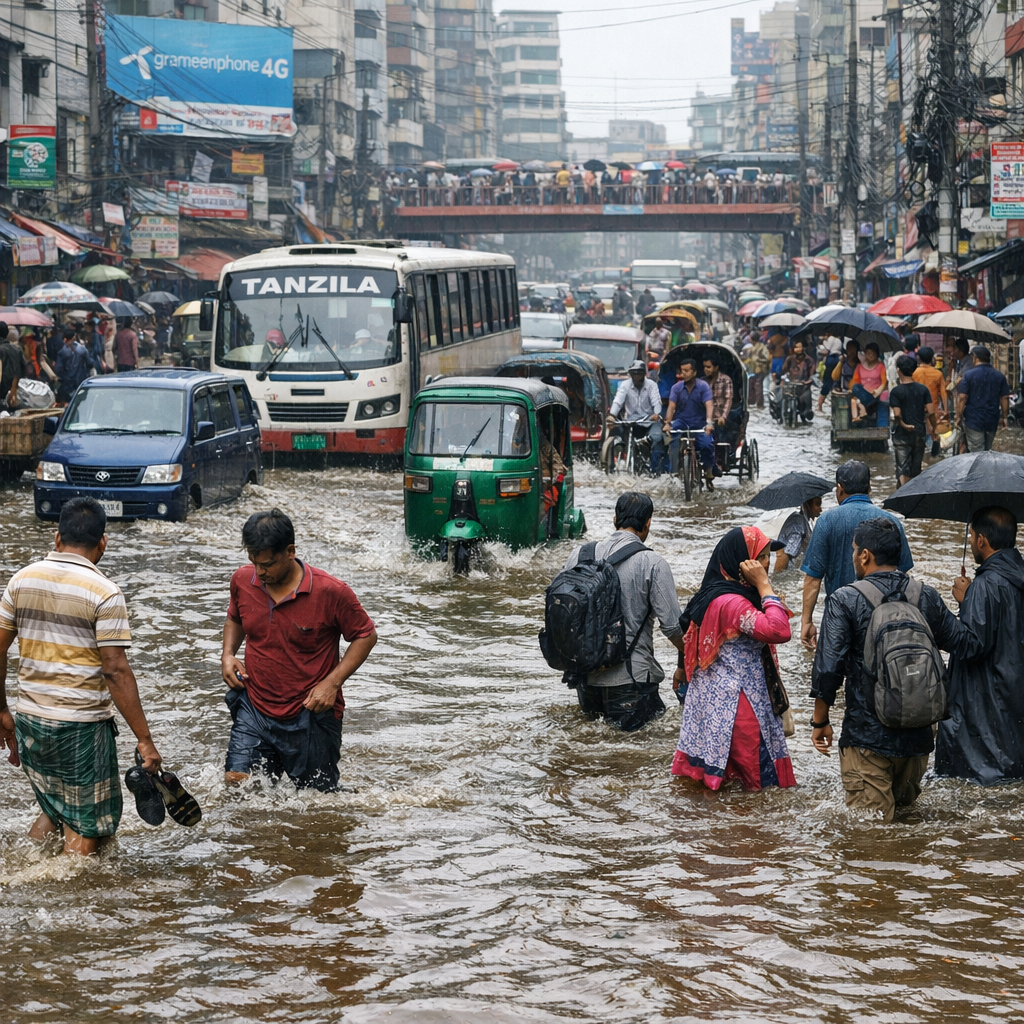
Dhaka, the capital of Bangladesh, continues to grapple with severe waterlogging, a problem exacerbated by rapid urbanization and inadequate drainage systems. Despite numerous initiatives, the city remains vulnerable to flooding during heavy rains, disrupting daily life and posing health risks to residents.
Identifying the Problem
Recent assessments have pinpointed 141 locations across Dhaka susceptible to waterlogging—108 in Dhaka North City Corporation (DNCC) and 33 in Dhaka South City Corporation (DSCC). This identification underscores the persistent challenges in managing the city’s stormwater effectively.
Contributing Factors
Several factors contribute to Dhaka’s waterlogging woes:
- Inadequate Drainage Infrastructure: Many secondary and tertiary drainage channels are poorly connected to primary discharge points, hindering efficient water flow.
- Encroachment on Water Bodies: Unauthorized developments have reduced the capacity of natural water retention areas, such as canals and ponds.
- Solid Waste Mismanagement: Improper disposal of waste leads to clogged drains, further impeding water flow.
Recent Incidents
In July 2026, torrential monsoon rains inundated several parts of Dhaka, crippling traffic and causing widespread suffering for commuters. The city’s drainage systems collapsed in many areas due to the continuous heavy downpour, highlighting the urgent need for effective solutions.
Proposed Solutions
To mitigate waterlogging, experts recommend:
- Revamping Drainage Systems: Upgrading and maintaining drainage infrastructure to ensure efficient water flow.
- Restoring Natural Water Bodies: Rehabilitating and preserving canals and ponds to enhance water retention capacity.
- Community Engagement: Raising public awareness about proper waste disposal to prevent drain blockages.
Looking Ahead
Addressing Dhaka’s waterlogging requires a coordinated effort between government agencies, urban planners, and the community. Implementing comprehensive strategies and ensuring their effective execution are crucial steps toward building a more resilient and livable city.