

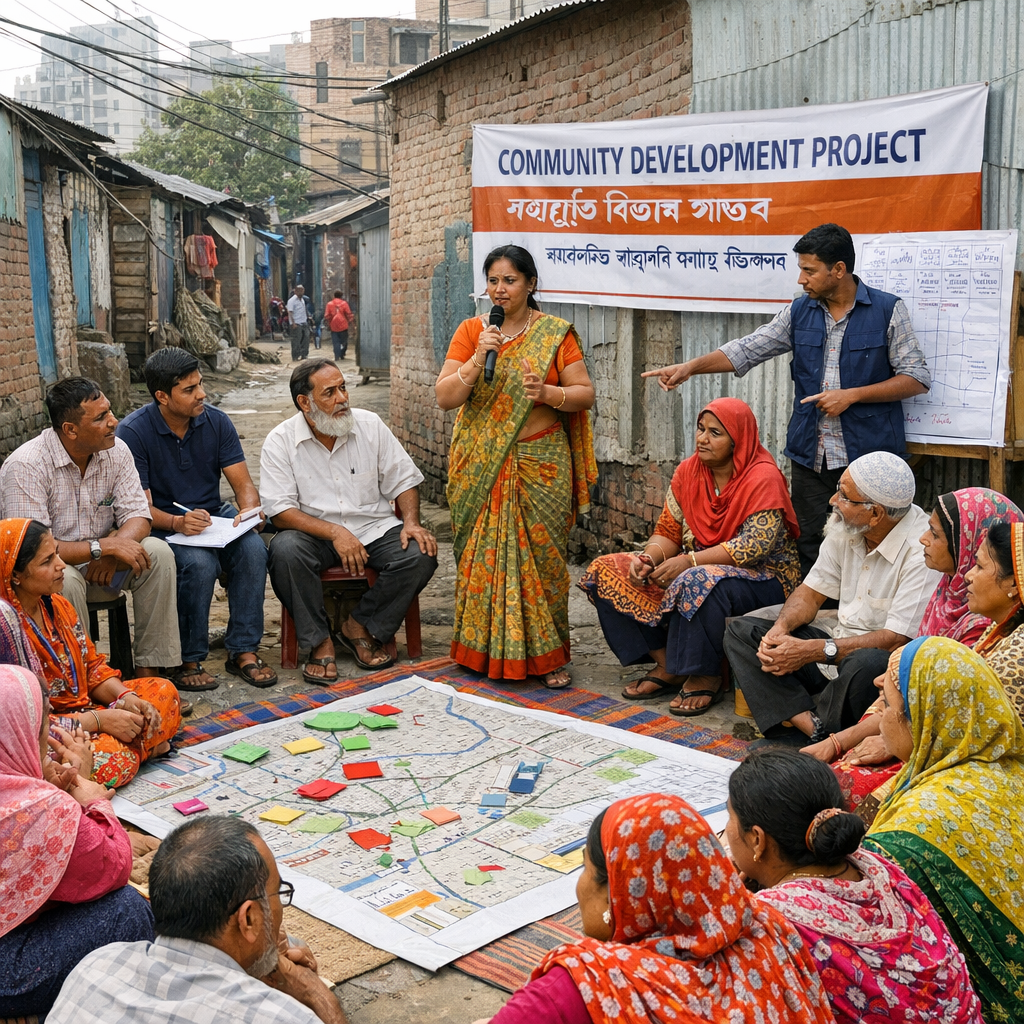
Dhaka, the bustling capital of Bangladesh, is home to a myriad of community development initiatives aimed at uplifting its residents. These programs address various challenges, from urban poverty to climate resilience, showcasing the city’s commitment to sustainable growth.
Holistic Community Development
Organizations like the Association for Realisation of Basic Needs (ARBAN) have been instrumental in providing essential services to Dhaka’s underserved populations. ARBAN’s initiatives encompass savings and credit assistance, non-formal education, primary healthcare, and water, sanitation, and hygiene (WASH) programs. Their efforts have significantly improved the quality of life for many residents by addressing fundamental needs and promoting self-sufficiency.
Climate Resilience and Urban Planning
With Dhaka’s rapid urbanization, climate resilience has become a pressing concern. The Dhaka Thrive project, a collaboration between the Open Mapping Hub – Asia-Pacific and World Vision Bangladesh, focuses on enhancing access to geospatial data in informal settlements. By mapping critical features and vulnerabilities, this initiative empowers communities and policymakers to make informed decisions, thereby strengthening urban resilience against climate hazards.
Empowering Women and Vulnerable Groups
Organizations such as the Society for National Charity (SNC) are dedicated to assisting underprivileged individuals in Dhaka through self-employment initiatives. SNC provides vocational training, distributes income-generating materials like sewing machines and rickshaws, and offers financial assistance for small businesses. These efforts aim to foster economic independence and improve the socio-economic status of vulnerable groups within the community.
Community-Led Environmental Initiatives
Environmental sustainability is a key focus for many local organizations. Waste Concern, for instance, has implemented community-based composting systems in Dhaka. By collaborating with local governments and the private sector, they have established composting plants that process organic waste, creating job opportunities and promoting better waste management practices within the community.
These initiatives exemplify the power of community-driven development in Dhaka. Through collaborative efforts and a focus on sustainability, they are paving the way for a more resilient and empowered urban population.