

By Sajid Ali
Dhaka is changing in more ways than one. Beyond the daily showers and seasonal heat, deeper shifts in temperature patterns, air quality, and water security are quietly altering life in our city. Here’s a guide to what’s happening — and what it means for everyone who lives here.
Seasonal Trends: Heatwaves, Winters, and Rainfall
The climate normals, based on observations from 1991–2020, show Dhaka’s summers are blisteringly hot: April’s highs average above 32°C, while winters offer relief with lows near 13°C in January. Rainfall is dramatically seasonal — June is overwhelmingly wet, with more than 350 mm of rain, while January nearly dries up, showing only about 7 mm. These patterns define the yearly rhythm of life and risk in Dhaka.
Hot summers: extended pre-monsoon heat from March through May, with high humidity.
Monsoon rains: intense rainfall between June and September that often exceeds the city’s drainage capacity.
Dry winters: cooler air, but winters are becoming milder, and cold outbreaks are rarer than decades ago.
What’s Shifting Over Time
Recent climate research reveals that periods of distinct seasons are blurring. Heatwaves that once focused in the pre-monsoon season now stretch into the monsoon months. Similarly, cold spells are less frequent and shorter. Average summer highs have climbed by over a degree Celsius compared with past decades, showing that the city is steadily warming. Meanwhile, heavy rainfall events remain frequent, but extreme rainfall days may be shifting in pattern. Such trends suggest that Dhaka is experiencing both warming and destabilizing seasonal norms.
Air Pollution: Rising Risks for Public Health
Dhaka’s air carries high levels of particulate matter (PM₂.₅ and PM₁₀), especially during dry winter months when air stagnation traps emissions. Vehicle exhaust, brick kilns, industrial chimney stacks, road dust, and construction are major contributors. During cooler, smoky mornings you may feel it — coughing, irritation, or difficulty breathing. Long-term exposure increases risks for asthma, heart and lung disease.
Water Woes: Safe Supply, Surface Damage, and Flooding
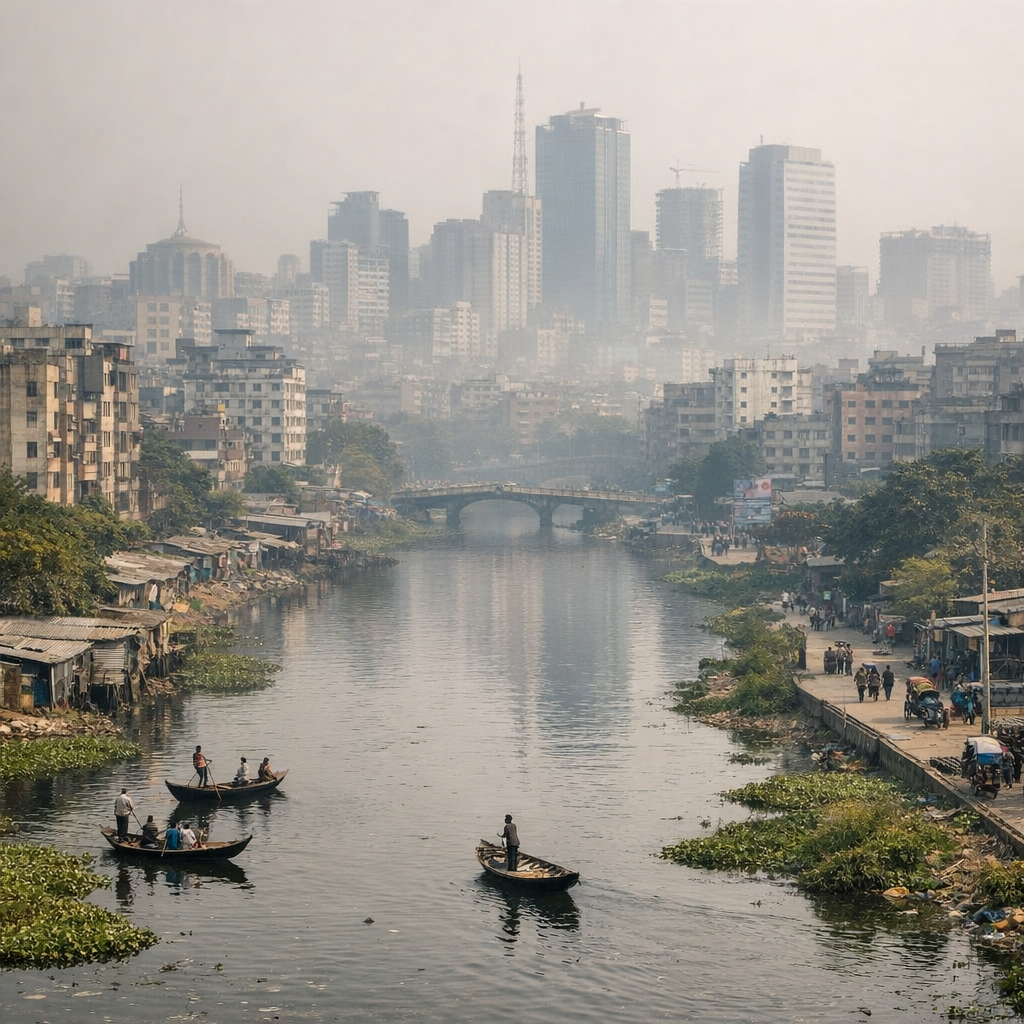
Water issues in Dhaka are layered. On one hand, much of the surface water — rivers, canals, wetlands — is polluted by untreated sewage, industrial effluent, and solid waste, which damages aquatic ecosystems and undermines water safety for nearby areas. On the other, groundwater supplies are under pressure from over-extraction and contamination by heavy metals and salts. Tap water in some neighborhoods shows elevated levels of metals like iron, lead, arsenic, manganese, posing health concerns.
As monsoon rains intensify, so do urban flooding and water-logging, especially in low-lying areas and places with blocked drainage. During the rainy season, roads and homes in several parts of Dhaka endure persistent flooding, leading to health risks from waterborne diseases and disruption of daily life.
What You Can Do & What Cities Should Prioritize
- For residents: Keep track of daily air quality alerts; use masks when needed. Ensure drinking water is filtered or boiled. In flood-prone zones, prepare emergency plans and rainfall maps.
- For local & city authorities: Improve and enforce air pollution regulations, especially for industries and traffic. Upgrade sewer and drainage infrastructure to handle heavier rainfall and reduce waterlogging. Expand safe drinking water supply; test for heavy metal contamination. Restore waterways and protect wetland buffers to absorb floodwaters and filter pollutants.
- For community groups: Raise awareness of household and industrial pollution, support rainwater harvesting and waste segregation. Advocate for green spaces — trees help with shade, cooling, and cleaning air.
Dhaka sits at a pivotal moment — enduring weather as it always has, but also bending under the weight of climate change, pollution, and city-growth. Recognizing these changes, and acting together, is key to keeping our city safe, healthy, and livable for all.